

Market Cap $0.64 Billion USD
Share Price $13.17
Annual Revenue $2.53 Billion USD
Earnings -$0.54 Billion USD
Bally's Corporation Stock Performance
Bally’s Corporation is a U.S.-based gaming and hospitality company headquartered in Providence, Rhode Island. The company operates casinos, hotels, and online gaming platforms across the United States, alongside select international exposure through its gaming and interactive segments.
What makes Bally’s different from more traditional casino operators is its structure. Instead of relying purely on physical casino resorts, the company has gradually shifted toward a hybrid model that combines land-based gaming with digital betting and iGaming platforms. This includes sports betting operations, online casino products, and broader interactive entertainment services that sit alongside its traditional casino business.
Over the years, Bally’s has grown largely through acquisitions and brand consolidation rather than organic expansion, building a portfolio that spans regional casinos, online platforms, and gaming partnerships. The strategy is ambitious, but also capital-intensive, and that balance between expansion and financial pressure has become a defining feature of the company.
Year-by-Year Performance
Bally’s market valuation has moved through several distinct phases, reflecting its transformation from a regional casino operator into a broader gaming and digital betting company.
| Year | Market Cap (USD) | Change vs Previous Year | Key Events & Strategic Updates | Full Report |
|---|---|---|---|---|
| 2026 | ~$0.56B |
-22.6% |
Continued pressure from high leverage, elevated interest costs, and restructuring focus. | N/A |
| 2025 | ~$0.72B |
-2.7% |
Integration phase of digital gaming (Bally Bet, iGaming) and newly acquired casino assets. | Download Full Report |
| 2024 | ~$0.74B |
-37.8% |
Market repricing driven by profitability concerns and high debt load. | Download Full Report |
| 2023 | ~$1.19B |
-39.9% |
Stabilization phase following acquisition-heavy expansion period. | Download Full Report |
| 2022 | ~$1.98B |
-1.5% |
Post-acquisition correction period as market absorbs rapid expansion across multiple casino properties. | Download Full Report |
| 2021 | ~$2.01B |
+30.6% |
Peak expansion cycle driven by aggressive acquisitions and strong post-pandemic gaming recovery. | Download Full Report |
| 2020 | ~$1.54B |
+20.3% |
COVID-19 disrupts revenue (~$372.8M), but transformation strategy into multi-platform gaming company begins. | Download Full Report |
What stands out here is not just the decline from peak valuations, but the volatility around the expansion period. The company’s valuation moved aggressively during its acquisition-heavy phase, then normalized downward as profitability and debt concerns became more visible to the market.
Company History
Company History
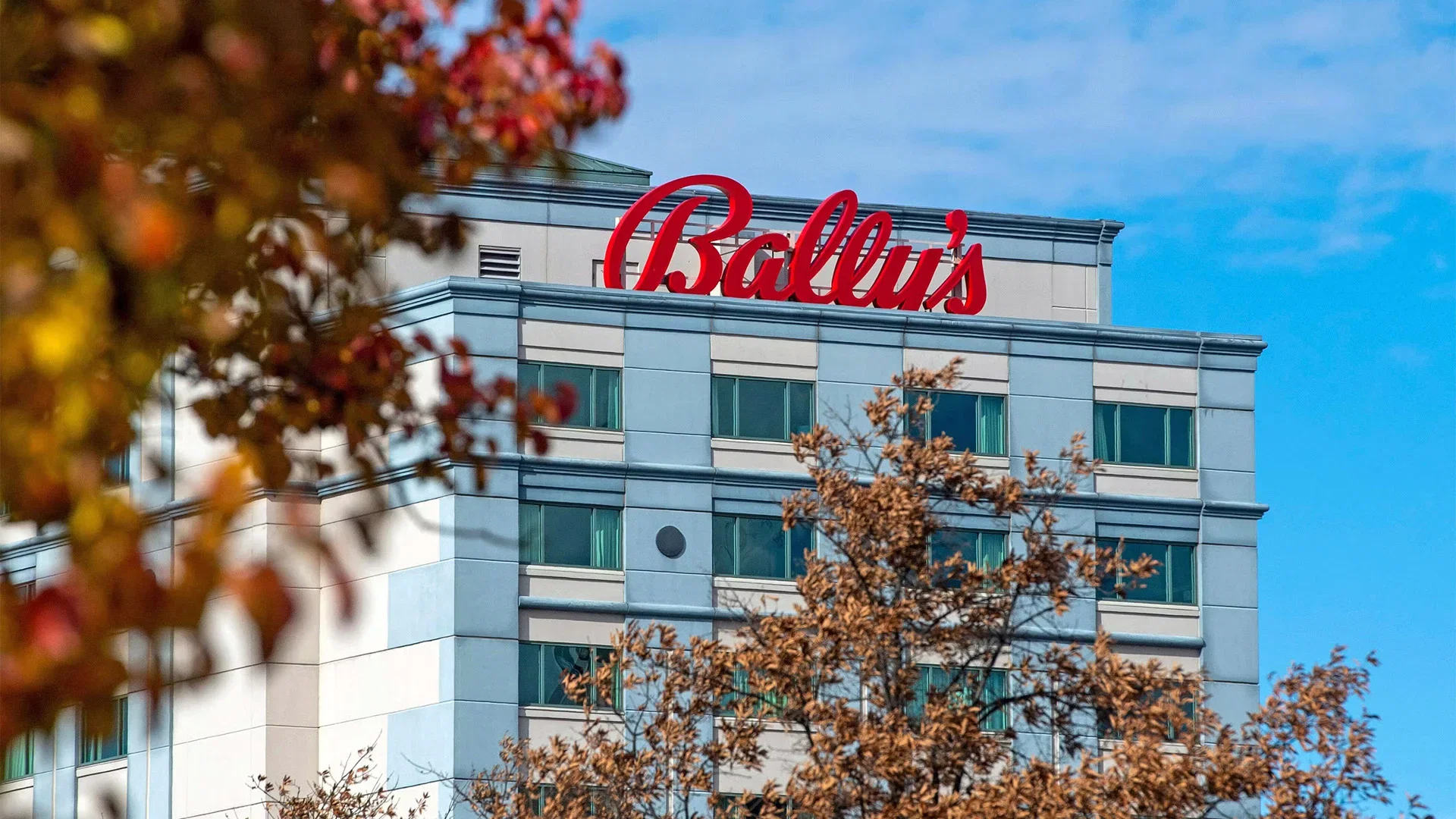
Bally’s Corporation’s modern identity is the result of a series of acquisitions, restructuring phases, and strategic rebranding efforts rather than a single long-standing casino legacy. The company’s origins trace back to regional gaming operations that were primarily focused on smaller casino properties and local gambling markets in the United States.
A major turning point came in 2020 when the company acquired the rights to the Bally’s brand from Caesars Entertainment and officially rebranded itself as Bally’s Corporation. This move was not just cosmetic—it marked the beginning of a broader strategy to reposition the business as a recognizable national gaming brand with ambitions beyond regional casinos.
Following the rebrand, Bally’s entered an aggressive expansion phase, acquiring multiple casino properties across different U.S. states. This period was defined by rapid portfolio growth, but also increasing financial complexity as the company integrated new assets into its operating structure.
At the same time, Bally’s began building its presence in online gaming and sports betting, launching initiatives such as Bally Bet and investing in iGaming capabilities. This shift represented a strategic attempt to transition from a traditional casino operator into a multi-channel gaming company combining land-based casinos with digital betting platforms.
In the following years, the company continued expanding through acquisitions and development projects, including large-scale casino developments in key U.S. markets. However, this growth strategy also significantly increased leverage and placed pressure on profitability, as integration costs and financing expenses rose alongside expansion.
Today, Bally’s remains in a transitional phase, balancing its traditional casino operations with its long-term goal of becoming a fully integrated omnichannel gaming and entertainment company, where both physical casinos and digital platforms operate under a unified ecosystem.
Financial & Performance Overview
Bally’s generates revenue from a mix of casino operations, digital betting platforms, and hospitality services. On paper, the company produces multi-billion-dollar annual revenue, driven largely by its physical casino assets and regional gaming operations.
However, profitability has been inconsistent. While revenue remains relatively strong, earnings performance has been pressured by acquisition costs, interest expenses, and ongoing investments in digital expansion. This has resulted in periods of net losses despite top-line growth.
The company also carries a relatively high debt load compared to many traditional casino operators, which adds additional pressure on cash flow and limits financial flexibility during weaker market cycles.
Products & Services
Bally’s operates across both physical and digital gaming environments. On the physical side, the company runs casinos, hotels, and entertainment venues that include slot machines, table games, and hospitality services.
On the digital side, Bally’s has developed its own sports betting platform and online casino offerings under the Bally Bet brand. These digital products are part of its long-term strategy to transition toward a more integrated gaming ecosystem, where users can move between physical and online gambling environments under one brand structure.
The company also has exposure to lottery-related services and B2B gaming operations through partnerships and acquisitions, adding another layer to its revenue model.
Bally's Corporation Leadership
Bally’s is led by CEO Robeson Reeves, with Chairman Soo Kim playing a major strategic role through Standard General, the company’s controlling shareholder group.
The leadership approach has been heavily focused on expansion and transformation. Rather than maintaining a purely regional casino strategy, management has pursued a broader vision of turning Bally’s into an omnichannel gaming company that can compete across both physical and digital gambling markets.
This strategy is aggressive by design, but it also places significant pressure on execution, capital allocation, and debt management.
Geographic Presence
Bally’s operates primarily within the United States, where the majority of its casino and gaming revenue is generated. The company has properties across multiple states, along with several major development projects in key gaming markets.
Outside the U.S., Bally’s has a smaller presence, particularly in the United Kingdom through acquired gaming assets. However, international exposure remains limited compared to global casino operators.
Despite its digital ambitions, the company is still heavily tied to U.S. regional gaming performance, making it sensitive to local consumer spending trends and regulatory environments.
Regulation & Compliance
Like all gaming companies, Bally’s operates under strict regulatory oversight. Its casinos are governed by state gaming commissions, while its online betting operations are subject to separate digital gambling regulations depending on jurisdiction.
Compliance requirements cover licensing, financial reporting, anti-money laundering policies, and responsible gaming standards. Because Bally’s operates across both physical and digital platforms, it faces a more complex regulatory environment than traditional casino-only operators.
Risks & Challenges

Bally’s operates with a risk profile that is heavily shaped by its expansion strategy. One of the biggest challenges is its high debt level, which has increased significantly due to acquisitions and development projects.
Another key issue is profitability. While revenue remains relatively strong, consistent net income has been difficult to achieve due to financing costs and ongoing investments in growth initiatives.
Execution risk is also a major factor, particularly with large-scale development projects that require substantial capital and long timelines before generating returns. On top of that, the company faces increasing competition in the digital betting space from more established online gaming operators.
Future Outlook
Bally’s future is closely tied to its ability to successfully integrate its physical casino operations with its digital gaming platforms. The company is aiming to build a unified ecosystem that connects land-based casinos, online betting, and interactive gaming services under a single brand structure.
If successful, this could position Bally’s as a mid-tier omnichannel gaming company with diversified revenue streams. However, the outcome depends heavily on execution, particularly in reducing debt pressure and improving profitability from its digital segment.
For now, Bally’s remains in a transitional phase, still anchored by traditional casino revenue, but increasingly defined by its attempt to scale into the digital gaming space.