
Market Cap $2.13 Billion USD
Share Price $16.01
Annual Revenue $6.96 Billion USD
Earnings -$0.42 Billion USD
Penn Entertainment Stock Performance
PENN Entertainment, Inc. is a North American gaming and entertainment company with a portfolio spanning casinos, racetracks, online sports betting, and iCasino offerings. The company presents itself as the largest omni-channel provider of entertainment experiences in North America, with 42 destinations on its consumer site, while its investor materials describe operations across 28 jurisdictions throughout North America and a diversified mix of retail and digital brands. Its brand portfolio includes Hollywood Casino, L’Auberge, ESPN BET, theScore BET, and PENN Play, reflecting a strategy that combines physical properties with digital betting and media assets.
Headquartered in Wyomissing, Pennsylvania, PENN has evolved from a regional casino operator into a broader gaming company with both retail and interactive divisions. Unlike pure online operators, PENN’s business model is built on a hybrid structure, where traditional casino and racetrack operations generate a large share of cash flow while digital betting and iCasino products are positioned as long-term growth drivers. Its market position is shaped by scale in regional gaming, a large loyalty ecosystem through PENN Play, and ongoing efforts to improve its digital business after the end of its ESPN alliance and the planned U.S. online sportsbook rebrand to theScore Bet in late 2025.
Year by Year Reports
PENN’s market cap history has been volatile over the last several years, reflecting pandemic-era digital enthusiasm, a later valuation reset, and investor scrutiny around the economics of online sports betting and interactive expansion. The company’s recent story has centered on balancing a strong retail footprint with improving returns from its interactive business.
| Year | Market Cap (USD) | Change vs Previous Year | Key Events & Strategic Updates | Full Report |
|---|---|---|---|---|
| 2026 | $2.03B |
-7.62% |
Lower valuation despite continued retail cash flow; 2025 results highlighted expected 2026 cash flow generation and a leaner interactive strategy | N/A |
| 2025 | $2.20B |
-22.71% |
Digital realignment after ESPN alliance termination; focus shifted toward regionally targeted marketing and theScore Bet rebrand | N/A |
| 2024 | $2.85B |
-27.76% |
Market remained cautious on interactive losses and execution; retail business stayed core earnings driver | Download Full Report Here |
| 2023 | $3.94B |
-14.29% |
Ongoing integration of ESPN BET strategy and omni-channel expansion; digital database growth remained a focus | Download Full Report Here |
| 2022 | $4.60B |
-47.58% |
Sharp post-hype valuation reset as online betting economics came under pressure across the sector | Download Full Report Here |
| 2021 | $8.78B |
-34.48% |
Shares corrected from prior highs; market reassessed digital gaming valuations and execution risks | Download Full Report Here |
| 2020 | $13.41B |
+352.63% |
Pandemic-era surge as investors priced in online betting upside and digital optionality | Download Full Report Here |
Company History
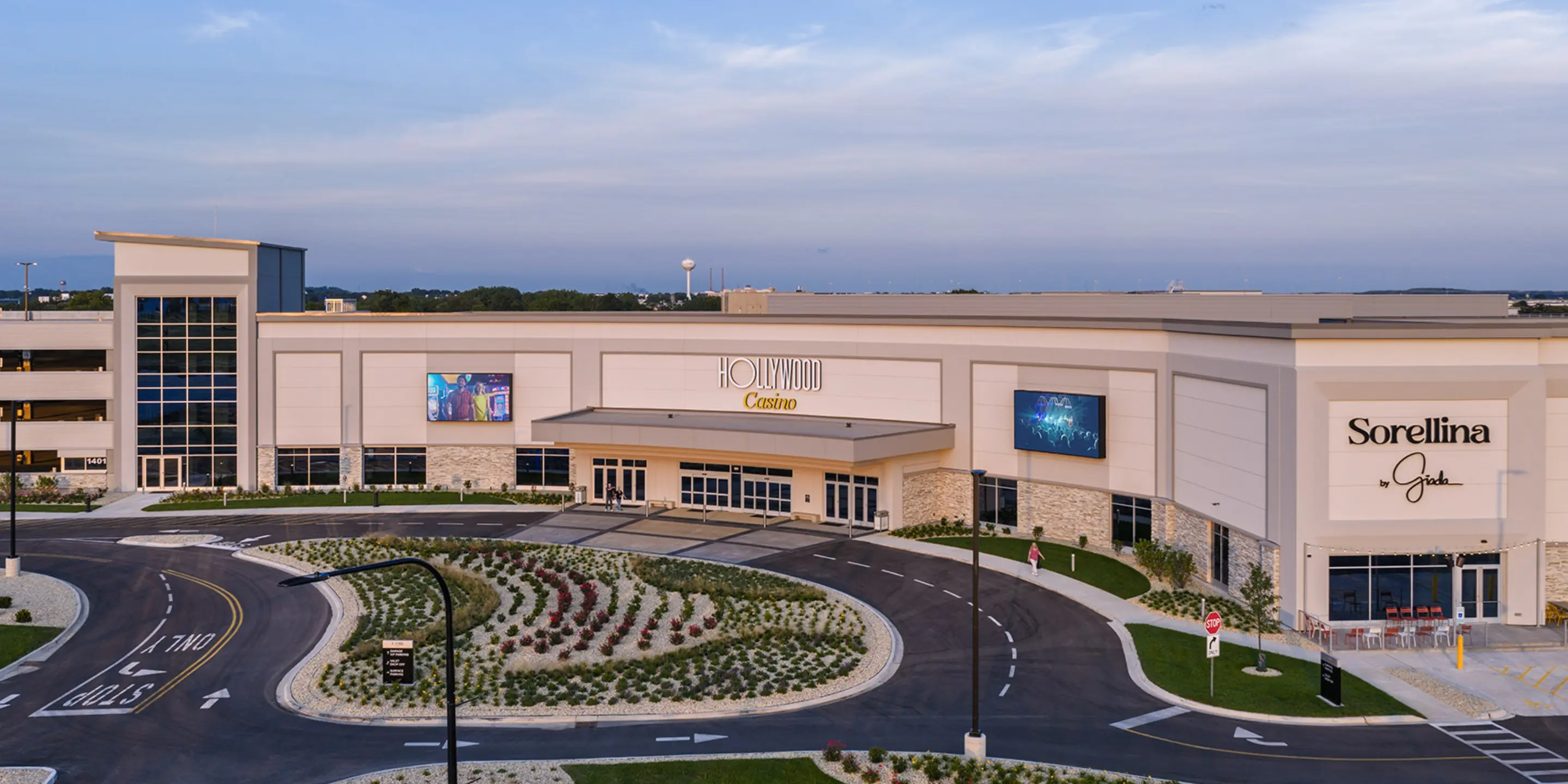
PENN’s roots go back to the regional gaming space in the United States, where it built scale through casinos and racetracks before expanding more aggressively into a broader entertainment and wagering model. Over time, the company developed a recognizable multi-property network under brands such as Hollywood Casino and L’Auberge, giving it a strong footprint in regional gaming markets. Its early identity was centered on physical destinations and gaming operations, rather than digital-first betting.
The company’s growth phase was driven by expanding its retail footprint and then layering digital capabilities on top of that base. This strategy accelerated as U.S. sports betting regulation opened new opportunities after 2018. PENN moved to build an omni-channel ecosystem by linking its casino database, loyalty program, media, and online betting products. The acquisition and development of media and digital betting assets, including theScore, became a major part of that strategy, helping PENN establish both a content and sportsbook presence in North America.
Recent developments have been more mixed. PENN partnered with ESPN to launch ESPN BET, but in November 2025 the company announced a realignment of its digital focus following the mutual termination of that alliance. It also said its U.S. online sportsbook would be rebranded to theScore Bet in December 2025, subject to approvals. Around the same period, PENN highlighted continued liquidity of $1.1 billion at year-end 2025 and signaled that 2026 cash flow generation would be supported by retail, interactive, and loyalty initiatives.
Financial & Performance Metrics
PENN’s financial model is built around a mix of Retail and Interactive operations. The retail business includes casinos, racetracks, and related hospitality revenue, while the interactive business includes online sports betting and iCasino. This structure makes PENN different from pure digital operators such as DraftKings and also different from resort-heavy operators like Monarch. Its retail segment has historically provided steadier cash flow, while interactive has been positioned as a growth engine with a longer path to profitability.
The company’s most recent public updates emphasize that its retail business remains best-in-class on a tax-adjusted EBITDAR margin basis, while the interactive segment has shown momentum in revenue and adjusted EBITDA improvement. PENN said it grew its digital database by more than 2 million members since the launch of ESPN BET, and that its iCasino business was becoming a more meaningful contributor. At the end of 2025, the company reported $1.1 billion in total liquidity, including $686.6 million in cash and cash equivalents, with traditional net debt of $2.2 billion.
In scale terms, PENN’s public market valuation is much lower than during the 2020 digital surge. As of April 2026, CompaniesMarketCap listed PENN at about $2.03 billion in market capitalization, up 6.42% year over year on that page’s current snapshot but still far below the company’s 2020 and 2021 peak levels. That gap reflects how much investor expectations around U.S. online betting have changed.
Products & Services
PENN offers a broad gaming and entertainment portfolio across retail and digital channels. On the retail side, the company operates casinos, racetracks, hotels, restaurants, entertainment venues, and sportsbook facilities across North America. On the digital side, it offers online sports betting and iCasino through brands including ESPN BET, theScore BET, and related casino products, supported by customer acquisition and cross-channel loyalty through PENN Play.
Its core offerings are best understood across several product groups:
- Regional casinos and racetracks, including Hollywood Casino and L’Auberge properties
- Online sports betting, previously centered on ESPN BET in the U.S. and now moving toward a theScore Bet-led strategy
- iCasino offerings, where management has pointed to improving contribution and momentum
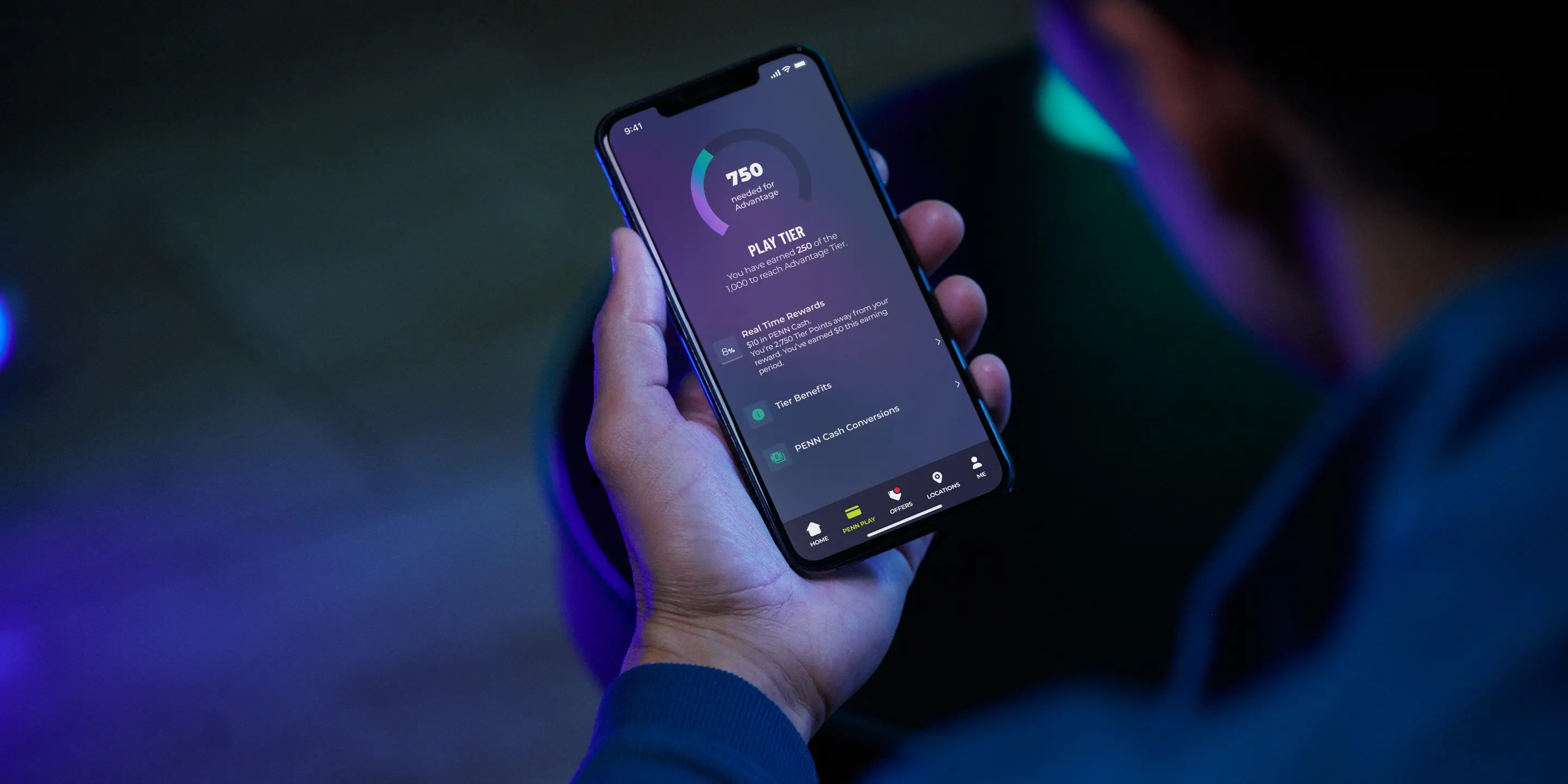
- Loyalty and wallet products, including PENN Play and PENN Wallet
- Media and content assets, especially through theScore in Canada and broader sports content integration
A major differentiator is PENN’s omni-channel strategy. The company tries to connect physical visitation, loyalty rewards, and digital wagering into one ecosystem, using its large retail database and property footprint as a customer acquisition advantage. Whether this becomes a durable edge depends on how efficiently PENN can convert retail customers into profitable digital users.
People (Leadership & Key Figures)
PENN is led by Jay Snowden, who serves as Chief Executive Officer and President. Official company materials describe him as leading a company that operates in 28 jurisdictions throughout North America with a diversified portfolio of casinos, racetracks, and online betting and iCasino offerings. His tenure has been closely associated with PENN’s push into digital gaming and media-driven betting.
The broader leadership and governance structure also includes an active board and corporate governance framework. Company governance pages identify Peter M. Carlino as Chairman Emeritus and note board-level oversight across audit, compensation, nominating, governance, and compliance functions. In January 2026, PENN also announced a new corporate organizational structure, signaling continued internal adjustments as it refines strategy after the ESPN alliance ended.
GEO (Geographic Presence)
PENN’s footprint is concentrated in North America, with operations across the United States and Canada. The company states it operates in 28 jurisdictions throughout North America, while its consumer-facing site highlights 42 destinations ranging from casinos to racetracks. That makes it one of the larger regional gaming networks on the continent.
Its primary revenue base is the United States, where most of its casinos, racetracks, and digital products are positioned. Canada is also strategically important because of theScore, which gives PENN both media and betting relevance in that market. Unlike companies such as Las Vegas Sands or Melco, PENN does not depend on Asia or destination-integrated resorts. Its growth story is much more tied to North American regional gaming and the evolution of U.S. online betting.
Regulatory & Compliance
PENN operates in a heavily regulated environment across multiple jurisdictions. Because it runs casinos, racetracks, sportsbooks, and online gaming products, it must comply with licensing, responsible gaming, anti-money laundering, and consumer protection requirements across state, provincial, and federal frameworks. The company’s public materials stress responsible gaming and direct users to support resources such as 1-800-GAMBLER.
Its regulatory exposure is broader than that of a single-state or single-product operator. That creates compliance complexity, but it also gives PENN experience navigating varied regulatory systems. The main compliance challenge is not just retaining licenses, but doing so while managing a hybrid business that spans traditional gaming, digital sports betting, and iCasino in a rapidly shifting policy environment.
Risks & Challenges
PENN faces a familiar set of risks for hybrid gaming companies, but with some company-specific pressure points. The biggest challenge is proving that its digital strategy can create long-term value without destroying the economics of the broader business. Investors have already reset expectations sharply since the 2020 and 2021 online-betting boom, and the termination of the ESPN alliance made that skepticism even more visible.
The company also operates in a market with heavy competition from well-capitalized rivals such as DraftKings, FanDuel, and BetMGM. That raises customer acquisition costs and makes sportsbook profitability harder to achieve. On top of that, PENN still carries meaningful leverage, with $2.2 billion in traditional net debt at the end of 2025, so capital allocation and execution matter a great deal. Because the retail business remains so important, any regional weakness in consumer spending, gaming demand, or local regulation can also affect performance.
Future Outlook
PENN’s near-term outlook is tied to three priorities: protecting retail cash flow, improving interactive economics, and making its loyalty ecosystem more valuable across channels. Management has said meaningful cash flow generation is expected in 2026, driven by Retail, Interactive, and PENN Play. That suggests the company still sees its hybrid model as the right long-term structure, even after changing course on ESPN BET.
The biggest question is whether PENN can turn its physical scale and digital database into a clearer competitive advantage. If its iCasino business keeps improving and the re-centered digital strategy becomes more efficient, PENN could strengthen its position as a differentiated North American omni-channel operator. If not, the market may continue valuing it primarily as a regional casino operator with limited digital upside. That tension will likely define the company’s story over the next several years.