
Esports World Cup 2026 Club Partner Program Expands Its Role in a Growing Ecosystem
The EWC 2026 Club Partner Program is set to support 40 organizations with funding and global exposure
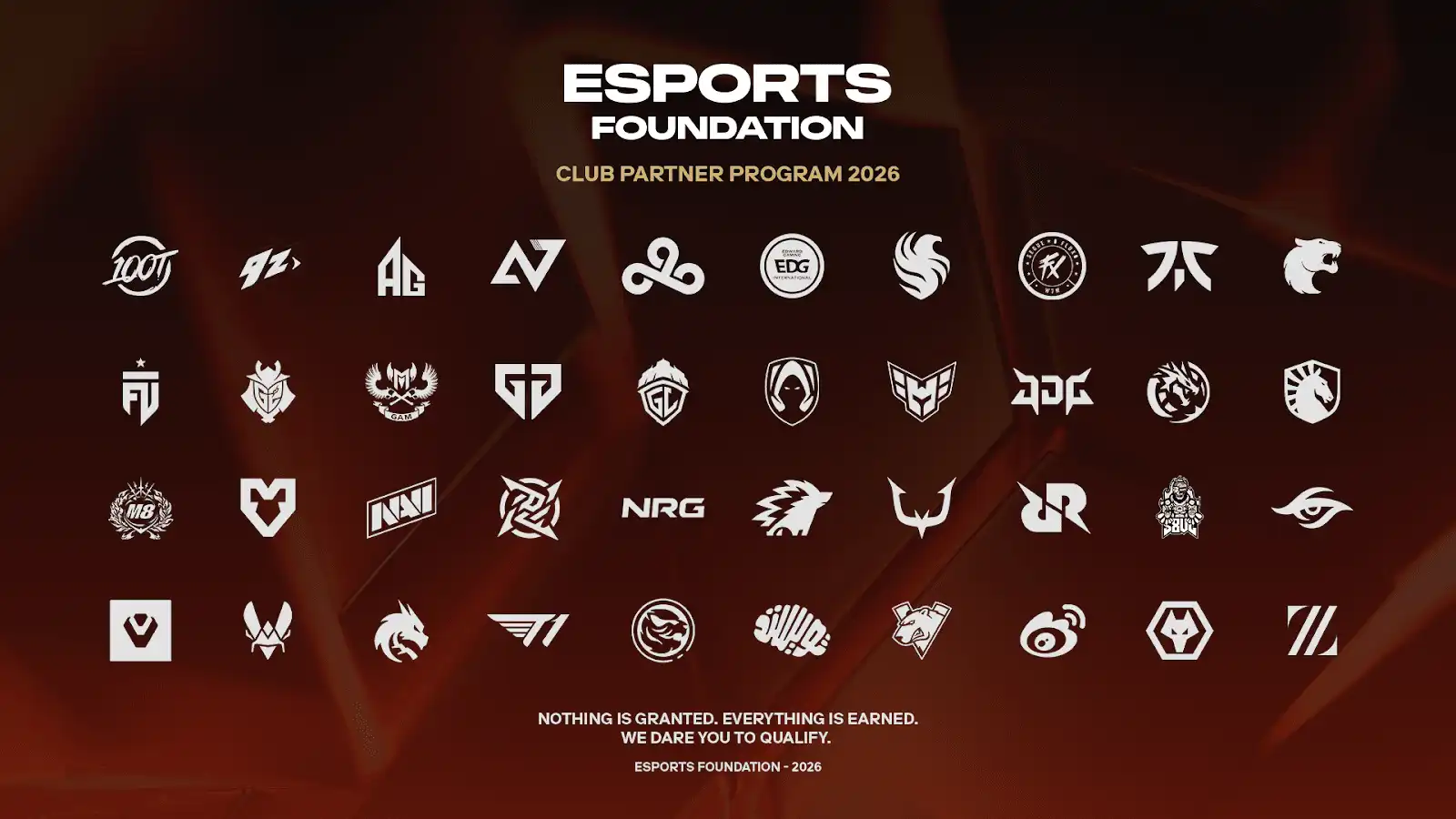
The Esports World Cup is continuing to build more than just a tournament series in 2026. With the return of the Club Partner Program, the focus is shifting further toward long-term support for organizations and a more structured global ecosystem.
At its core, the program is designed to support 40 selected esports organizations with funding, exposure, and operational backing. The Esports World Cup Foundation has committed around $20 million to the initiative, with teams receiving financial support aimed at growing their brand, content, and global audience.
This is not prize money tied to results. It is direct investment into organizations, giving them resources to expand into more titles and strengthen their presence ahead of the Esports World Cup.
Built Around a Club-Based System
The Club Partner Program is closely tied to the broader structure of the Esports World Cup, particularly the Club Championship system.
Rather than focusing on single-game success, the EWC rewards organizations that perform across multiple titles. Teams earn points from different tournaments, with overall standings determining the top-performing clubs by the end of the event.
Recent updates to the Club Championship further reinforce this approach, putting more emphasis on consistency and multi-title participation. This aligns directly with the partner program, which encourages organizations to field rosters in several games instead of focusing on just one.
Part of a Larger Competitive Framework
The Club Partner Program does not operate in isolation. It is one piece of a wider system that includes the “Road to EWC,” a global qualification circuit that connects over 200 tournaments worldwide.
This structure creates a full competitive pipeline:
- Regional leagues and tournaments feed into qualification
- Organizations build rosters across multiple games
- Results contribute to the Club Championship at the main event
At the center of this system are the partner organizations, which are positioned as the key drivers of viewership, fan engagement, and cross-title competition.
Selection and Expectations
For 2026, the program again caps participation at 40 teams, with applications running late 2025 and final selections confirmed ahead of the season.
Selection is not based purely on competitive results. Organizations are evaluated on a mix of factors, including performance, fan engagement, and their ability to grow in key regions such as Southeast Asia, China, and Latin America.
In return, teams are expected to contribute to the ecosystem through content, storytelling, and broader fan outreach tied to the Esports World Cup.
Importantly, being part of the program does not guarantee a slot at the event. Teams still need to qualify through official tournaments and circuits.
A Shift Toward Sustainability
The Club Partner Program reflects a larger shift in how esports events are structured. Instead of relying only on prize pools, the Esports World Cup is investing directly in organizations as long-term partners.
This approach addresses one of esports’ biggest challenges: sustainability. By providing consistent funding and incentives to grow across multiple titles, the program encourages stability and long-term planning rather than short-term results.
At the same time, it strengthens the EWC itself. With supported organizations competing across different games, the event becomes more connected, with storylines that carry from one title to another.
The 2026 Club Partner Program is not just about which teams are included. It is about how the Esports World Cup is trying to reshape the competitive landscape.
By combining financial support, a global qualification system, and a multi-title championship format, the EWC is building a structure where organizations play a central role.
If it continues to grow, this model could influence how future esports events support teams and build long-term ecosystems, not just one-off tournaments.
For more esports and industry news, stay tuned for UMG Gaming.
About the author
CJ
Christian Joseph “CJ” Zambale is a journalist and content specialist who covers the iGaming and esports industries.