
Riot Games Reveals New VCT 2027 Format and Revenue Model
VALORANT esports is set for a major overhaul in 2027 as Riot Games introduces open qualifiers, VCT Cups, expanded LAN events, and a new financial model for teams.

Riot Games has shared new details about the future of the VALORANT Champions Tour, confirming that the VCT will move away from its current league structure in 2027 and adopt a fully tournament-based ecosystem. The overhaul represents one of the biggest changes in VALORANT esports since the introduction of partnerships and regional leagues in 2023, with Riot promising a more open competitive system, expanded global events, and broader financial opportunities for teams.
The new model is built around a simple philosophy: every match should matter, every team should have a path to the biggest events, and more fans should have the opportunity to experience live VALORANT competitions. Rather than relying on league splits throughout the year, teams will compete through a series of tournaments that feed directly into Masters and Champions. Riot believes the structure will create more meaningful matches while making the road to international competition more accessible for organizations outside the partnership system.
VCT 2027 Format at a Glance
| Category | Details |
|---|---|
| Competition Model | Tournament-based ecosystem |
| Open Qualifiers | Available to all teams |
| Regional Leagues | Replaced by VCT Cups |
| International Events | Masters and Champions |
| Annual Events | More than 20 tournaments |
| Host Cities | 16+ cities worldwide |
| Tournament Type | Primarily LAN |
| Partnership Cycle | New two-year cycle begins in 2027 |
Open Qualification Replaces Traditional League Structure
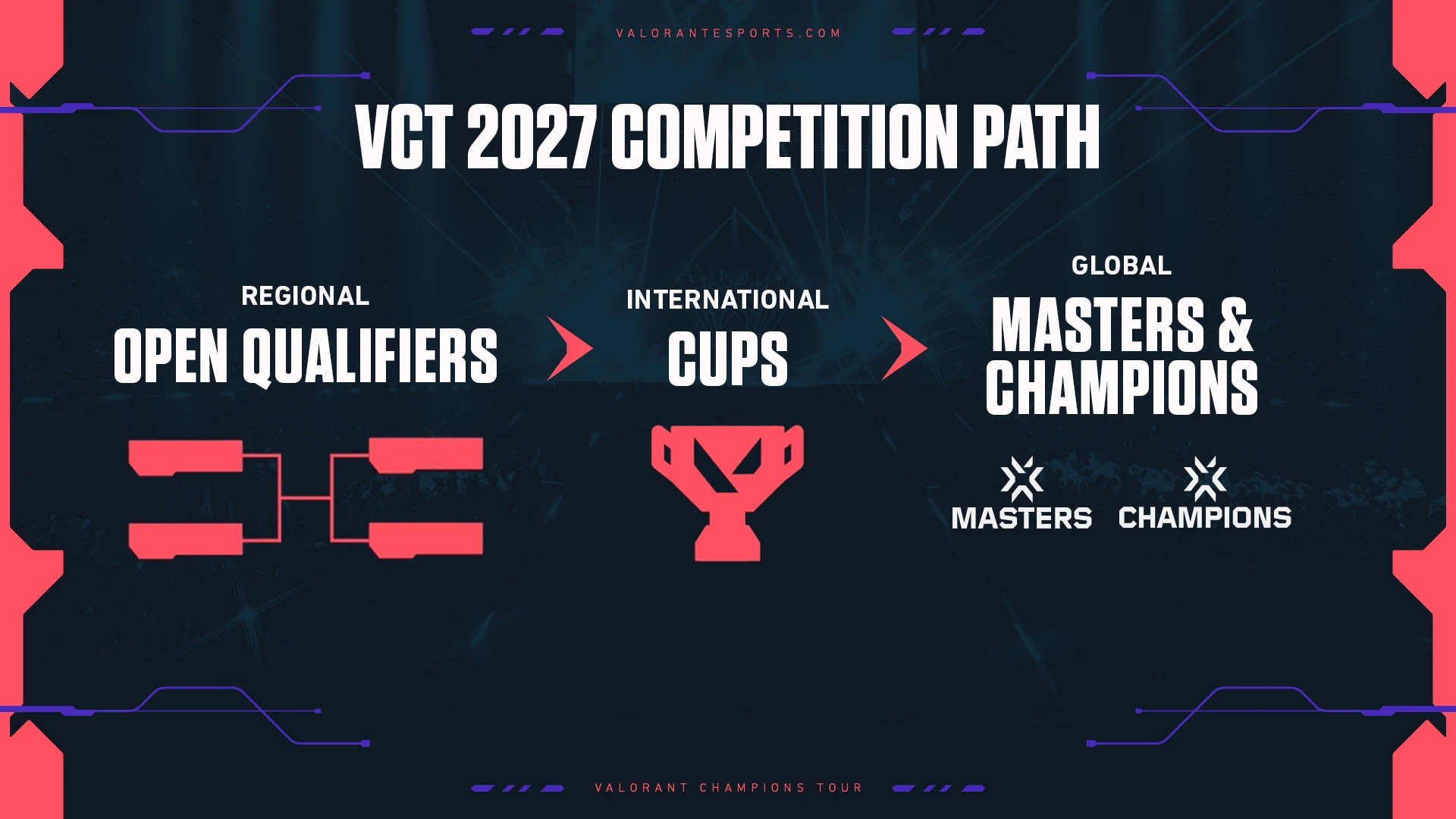
One of the biggest changes is the introduction of open qualification pathways for every team. Beginning in 2027, all routes to Masters and Champions will start through open qualifiers, giving non-partnered organizations multiple opportunities throughout the year to reach international competition. Qualification routes may include community tournaments, collegiate events, partner tournaments, Premier, and other regional competitions, with additional details expected later this year.
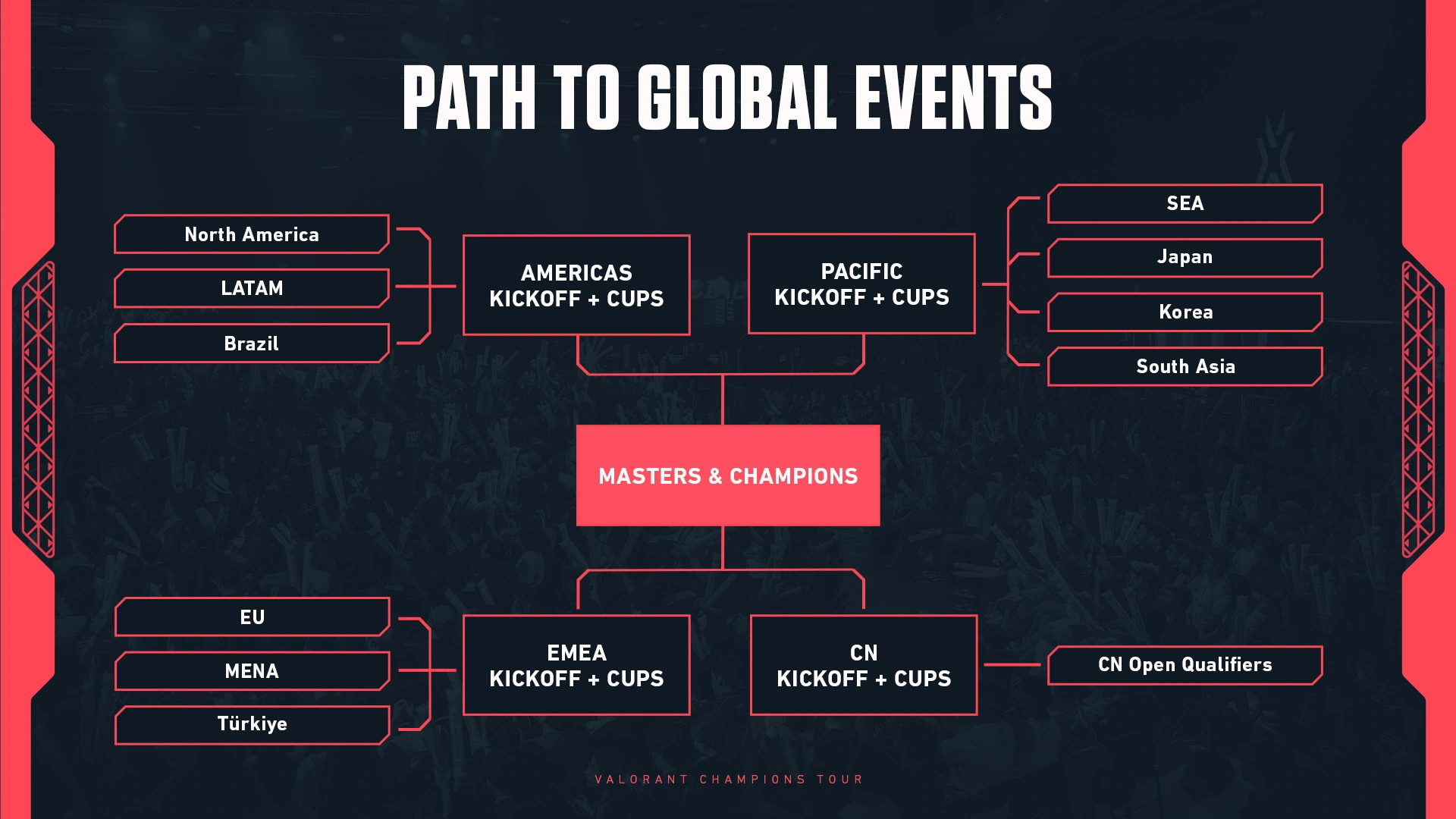
Regional league play as fans currently know it will effectively disappear. In its place, Riot will introduce VCT Cups, LAN tournaments that will act as the primary competitive building blocks of the season. Each major region will host multiple Cups throughout the year, with the strongest teams advancing to Masters and Champions. According to Riot, the new structure is intended to increase competitive stakes by ensuring that every tournament has meaningful implications for qualification and championship aspirations.
The shift also removes the traditional separation between partnered and non-partnered competition. While partnership remains part of the ecosystem, Riot is creating a system where organizations outside the partnership program can qualify directly for major international events rather than spending an entire season attempting to earn promotion through Ascension.
Riot Expands Financial Support Beyond Partner Teams
The financial side of the announcement may be just as significant as the competitive changes.
Riot Games revealed that it distributed more than $86 million through digital goods programs in 2025 and intends to expand financial opportunities to a larger number of teams under the 2027 model. Every tournament will include qualification incentives that reward teams simply for reaching the event, with payouts increasing substantially as teams progress through the competitive ladder. Riot stated that qualification rewards will roughly double from Cups to Masters and double again from Masters to Champions.
The publisher also confirmed that annual tournament prize pools will exceed $6 million, while travel expenses for global events will be fully covered. Riot added that Cup-related payments will be distributed quickly to help organizations manage logistics such as travel arrangements and visa applications. A portion of ecosystem funding will also continue supporting Game Changers, Riot's competitive circuit for marginalized genders.
Partnered organizations will continue receiving benefits through a new two-year partnership cycle beginning in 2027. Those benefits include guaranteed base payments, performance bonuses, team capsule revenue opportunities, and direct seeding advantages in qualification tournaments. However, Riot emphasized that strong non-partner teams could potentially earn more through tournament success than lower-performing partnered organizations, creating a more open competitive environment than the current system.
Read Also:
More Events, More Cities, More Opportunities
Beyond the format changes, Riot is significantly increasing the number of live competitions on the calendar. The company plans to host more than 20 tournaments annually across over 16 cities worldwide, with competitions taking place on LAN through a combination of Riot-operated venues and third-party locations. Each Cup event will culminate in a live finals weekend, giving fans more opportunities to attend high-level VALORANT competition throughout the season.
The changes arrive at a time when esports organizations continue searching for sustainable business models. Riot's goal appears to be creating a system that maintains the stability offered by partnerships while introducing greater competitive mobility for aspiring teams. Whether the new structure delivers on those ambitions remains to be seen, but it represents the most dramatic evolution of the VCT since the franchise era began.
For fans, the immediate takeaway is simple: more tournaments, more LAN events, and more chances for underdog teams to make deep runs on the international stage. For teams, the challenge now shifts to preparing for a future where every event carries significant competitive and financial stakes.
For the latest esports news, tournament coverage, and esports betting updates, stay tuned with UMG Gaming.
About the author
CJ
Christian Joseph “CJ” Zambale is a journalist and content specialist who covers the iGaming and esports industries.