
Chess Is Becoming a Legitimate Esport, and the EWC Is Proving Why
Chess is no longer just a traditional board game. The EWC's $1.5 million tournament shows why rapid formats, streaming and superstar players are making chess a natural fit for esports.

CJ Zambale
Content Writer · August 13, 2026
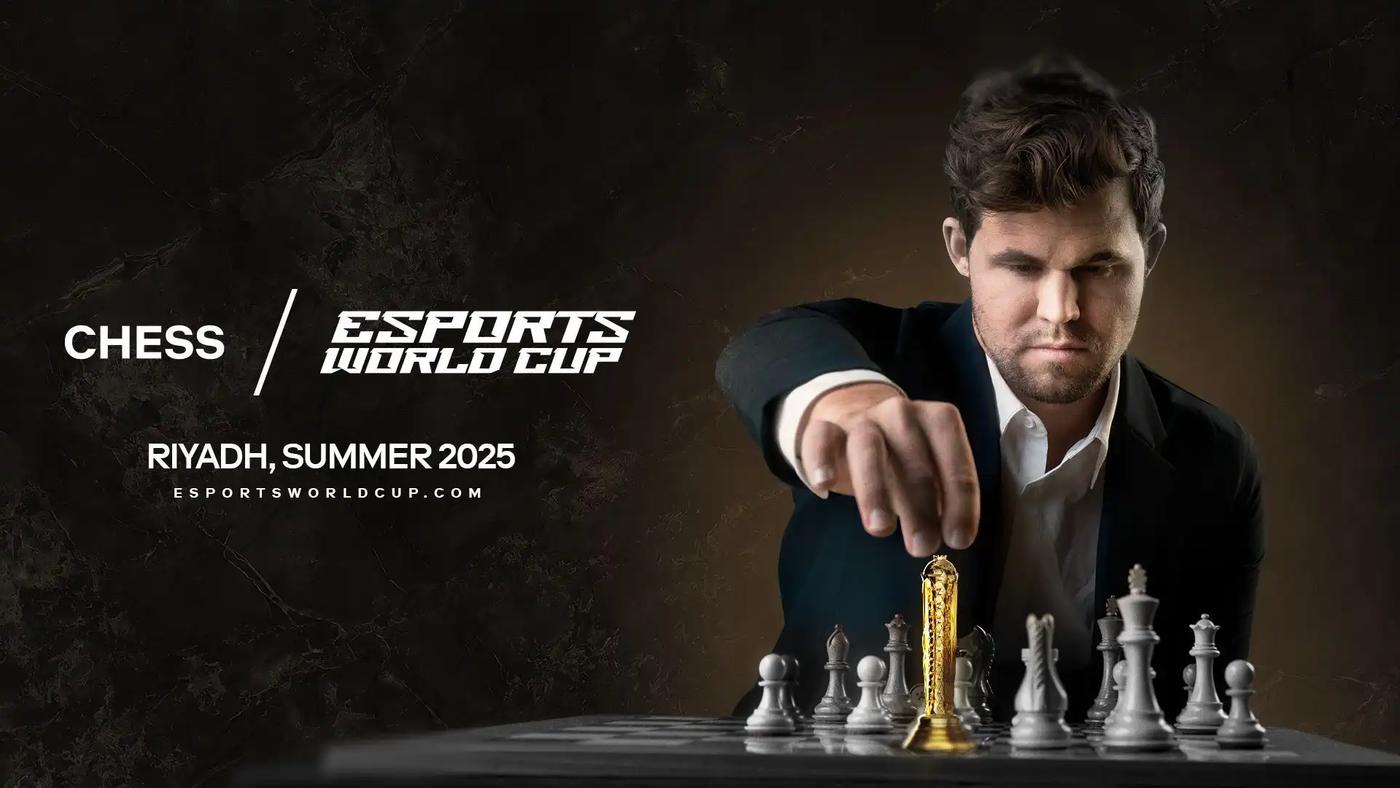
Chess has been around for centuries, but the way people watch and play it has changed dramatically. Online platforms, streaming, rapid formats and a new generation of personalities have pushed competitive chess far beyond the traditional image of players sitting across a board for hours.
The Esports World Cup is the latest example of that shift. Chess returned to the EWC in 2026 following its debut last year, with 22 elite players competing in Paris from August 11 to 15 for a $1.5 million prize pool. The winner will take home $250,000, but the bigger story is what the tournament says about chess itself.
The game does not need to become something completely different to work as an esport. It already has most of the ingredients.
Chess Has Everything an Esport Needs
The biggest obstacle chess has traditionally faced as a spectator sport is also one of its defining characteristics: it can be slow.
A classical game can last for hours, with long stretches where very little appears to happen to anyone who does not understand the deeper strategy. That is not necessarily a problem for dedicated chess fans, but it makes the format difficult to sell to a broader audience used to the constant action of League of Legends, Counter-Strike or fighting games.
Rapid chess changes that equation.
At the EWC, players compete with 10 minutes on the clock and no increment. Once the clock reaches zero, the game is over. That creates something esports audiences already understand instinctively: pressure.
A player can spend several minutes building the perfect position and then suddenly find themselves with seconds to make a decision. A technically superior position can disappear because of time pressure, while a player who looks completely beaten can survive long enough to force an opponent into a mistake.
That makes the game considerably easier to follow as a live spectacle. There is a visible clock, a clear objective and a constant sense that the next move could change everything.
Chess does not need explosions or complicated game mechanics to create drama. The clock does much of the work.
Magnus Carlsen Is Already an Esports Star
The other major advantage chess has is its players.
Magnus Carlsen is not simply one of the greatest chess players ever. He is one of the most recognizable competitive gaming personalities in the world, with an enormous online following and years of experience playing rapid and blitz chess in front of digital audiences.
That makes Carlsen a natural fit for an event such as the EWC.
He will return to Paris as the defending champion, representing Team Liquid, after winning the inaugural EWC chess tournament. His presence also gives the event an instantly recognizable storyline: the best-known player in the field is trying to defend his title against a group of players capable of beating him.
That field includes Hikaru Nakamura and Alireza Firouzja, who will represent Team Falcons. Both bring their own audiences and established reputations to the tournament, giving the competition something that traditional esports has relied on for years: recognizable players with fanbases that follow them regardless of the event.
Chess has increasingly built this kind of player-driven culture online. Grandmasters are streaming games, creating educational content, competing in rapid tournaments and interacting directly with their audiences.
That is not particularly different from what has happened across other esports.
The EWC Is Turning Chess Into A Team Sport
There is another reason the EWC is interesting for chess: the players are competing as representatives of esports organizations.
Carlsen competing for Team Liquid and Nakamura and Firouzja representing Team Falcons changes how the tournament can be viewed. Chess itself remains an individual game, but the players are now part of a larger competitive ecosystem where their results contribute to the identity and success of an organization.
That is an important distinction.
Traditional chess tournaments generally revolve around the individual player and their country, federation or sponsor. The esports model adds another layer. Fans can follow Team Liquid across multiple games and then watch Carlsen compete for the same organization in chess.
It also gives esports organizations another way to build their brands. A fan who might not normally follow chess can become interested because a player from their favorite esports organization is competing.
The EWC is particularly well suited to this approach because the tournament already brings together games with completely different competitive cultures. Chess does not have to imitate League of Legends or Counter-Strike. It simply has to give its players and teams the same platform.
The Format Is Changing What Chess Can Look Like
The EWC's 2026 tournament begins with an eight-player Play-In before moving into a 16-player group stage and knockout playoffs.
The fast format should create plenty of opportunities for upsets. Several major names will also be absent because of scheduling conflicts with the Grand Chess Tour, including Fabiano Caruana, Wesley So, Anish Giri and Praggnanandhaa Rameshbabu.
That opens the door for less established players to make a deep run, particularly in a format where one bad game can have a much greater impact than it would in a long classical match.
And that is perhaps the most important part of chess's evolution as an esport. Rapid formats do not replace classical chess. They give the game another way to be consumed.
The same thing has happened across competitive gaming. Different formats exist because audiences do not all want the same experience. A five-hour chess game can appeal to a dedicated audience, while a 10-minute game can be much easier to package for a livestream, tournament broadcast or short-form clip.
Chess Does Not Have To Become An Esport. It Already Is One
The debate over whether chess is an esport can sometimes miss the point.
Competitive chess already has professional players, major tournaments, global broadcasts, online competition, dedicated audiences, streaming personalities, team organizations and significant prize money. The EWC is not creating those things from scratch.
What it is doing is putting all of them into the same environment as some of the world's biggest esports.
That matters because chess has become increasingly comfortable in that environment. The players are accustomed to playing online. Fans can follow matches through streams and co-streams. Rapid formats provide the kind of immediate tension that works well on broadcast. Organizations can sign players and build teams around them.
And now one of the biggest esports events in the world is putting $1.5 million behind a chess tournament.
Carlsen's title defense in Paris is therefore about more than whether the world's best-known grandmaster can win another trophy. It is another test of how far chess can go when it adopts the formats, presentation and ecosystem that have helped esports become a global entertainment industry.
Chess has survived for hundreds of years because it keeps adapting. Its latest evolution may simply be its most digital one yet.
For the latest esports news, tournament coverage, and esports betting updates, stay tuned with UMG Gaming.