
What Is the Esports Nations Cup and How Is It Different From the Esports World Cup?
THE ESPORTS NATIONS CUP IS INTRODUCING COUNTRY-BASED COMPETITION TO ESPORTS.

CJ Zambale
Content Writer · April 6, 2026
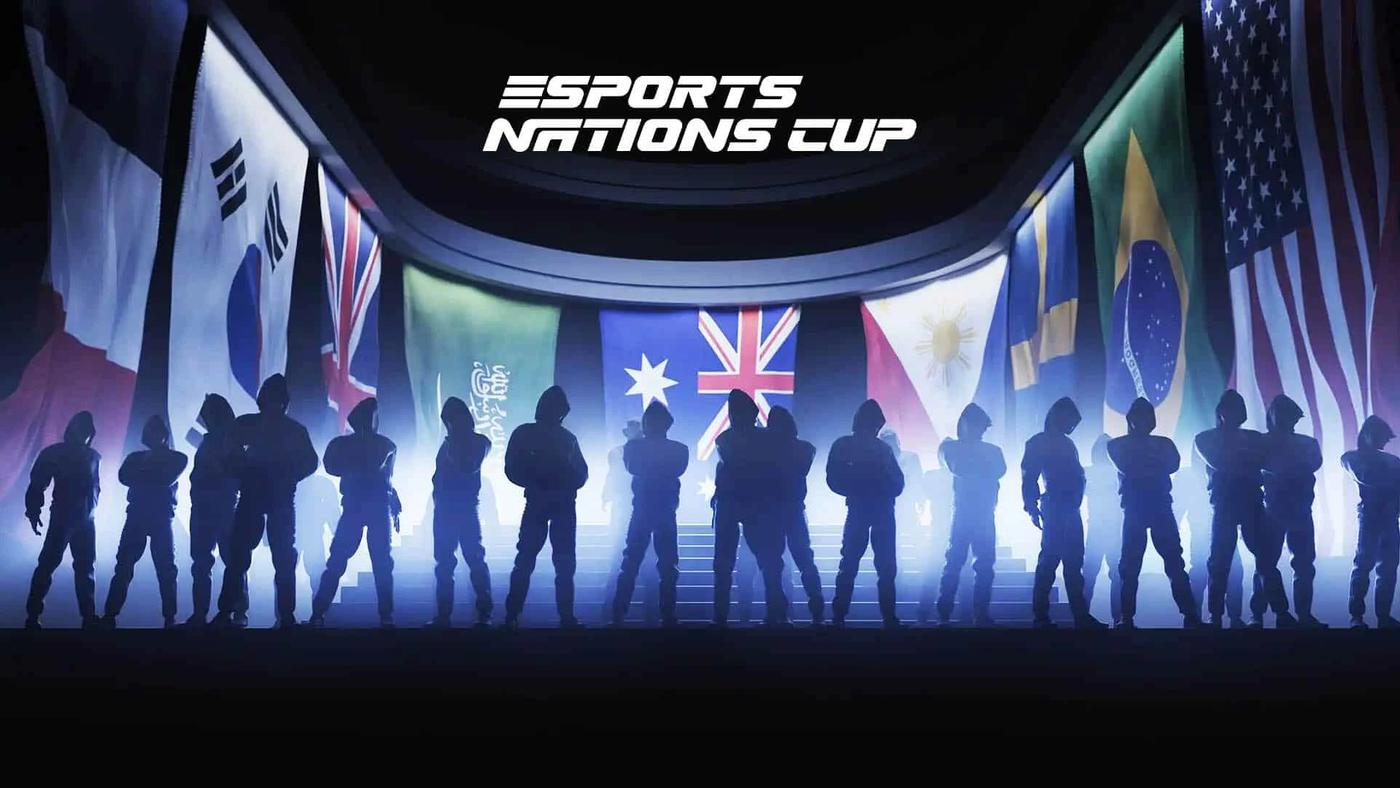
The Esports Nations Cup (ENC) has been around in conversation since last year, but a lot of people are still trying to figure out what it actually is.
At a glance, it sounds similar to the Esports World Cup. It has the same organizers, the same location, and the same large-scale ambition. But once you look closer, it’s clearly trying to do something different. Instead of organizations like T1 or G2, the focus shifts to something esports has never fully committed to. Countries.
What exactly is the Esports Nations Cup?
At its core, the ENC is a multi-title international tournament where players represent their country instead of their esports organization. It was announced back in 2025 and is scheduled to debut in November 2026 in Riyadh. That shift alone changes how the entire competition works.
Rather than the usual club rivalries, the matchups start to look very different. You’re looking at potential games like South Korea versus China, the United States against Brazil, or even the Philippines taking on Vietnam depending on the title. It leans heavily into national pride, something traditional sports have built their identity around, but esports has mostly avoided.
The event is also meant to stick around. It’s planned as a recurring competition that runs every two years, not just a one-time experiment.
When it comes to format, the ENC is more structured than it might seem at first. This isn’t just about gathering players under a flag and letting them compete. Each country will send one official roster per game, along with a limited number of representatives for individual titles.
For team-based games like Counter-Strike or League of Legends, the number of participating countries could range from around 24 to 48 teams per title. Individual disciplines scale even higher, with some formats allowing up to 128 players depending on the game.
Getting into the tournament also isn’t as simple as receiving an invite. Qualification is expected to come through a mix of regional tournaments, global rankings, wildcard entries, and additional slots designed to ensure broader international representation. It’s clearly built to balance competitive integrity with inclusivity.
One of the more interesting rules is how national teams are formed. Full esports rosters cannot simply enter as-is under a country banner. Instead, countries are expected to build their teams from eligible players across different organizations.
That means you won’t see a direct copy of a pro team competing under a national flag. What you’re more likely to see are mixed rosters, pulling top players from different teams into a single lineup. In theory, this could lead to “dream teams” where players who are usually rivals end up playing together.
Esports Nations Cup 2026 Titles
At the time of writing, the Esports World Cup Foundation has revealed 15 of the 16 titles appearing at the Esports Nations Cup. The full list can be found below:
- Apex Legends
- Chess
- Counter-Strike 2
- Dota 2
- EA Sports FC (seemingly 27?)
- Fatal Fury: City of the Wolves
- Honor of Kings
- League of Legends
- Mobile Legends: Bang Bang
- PUBG: Battlegrounds
- PUBG Mobile
- Rainbow Six: Siege X
- Rocket League
- Street Fighter 6
- Trackmania
- Valorant
As more titles are added to the line-up, UMG Gaming will update the article with the new additions alongside information on the event.
Why This Feels Different
If you’ve followed esports for a while, this stands out right away.
Most international tournaments still revolve around organizations or publisher systems. Teams may come from different regions, but they’re still playing under club banners.
The Nations Cup adds something new. It puts countries at the center without replacing existing competitions. Clubs built esports, but this introduces another layer.
There’s also a different kind of connection here. Fans who don’t follow a specific team might still support their country. That’s something esports hasn’t really tapped into at this scale.
How It Differs From the Esports World Cup
This is where people get confused. The Esports World Cup and the Nations Cup are connected, but they serve different roles.
The Esports World Cup is still about organizations. Teams qualify through leagues and compete under their org banner for large prize pools.
The Nations Cup works differently. Players represent their country, not their team. That changes how rosters are built and how fans engage with the event.
The goals are different too. The World Cup focuses on which organization is the best across multiple titles. The Nations Cup is about which country has the strongest overall talent pool.
That means depth matters more than just star power.
They’re also held at different times. The Esports World Cup runs in the summer, while the Nations Cup is scheduled for November. This makes it possible for players to join both.
Why National Programs Are Starting to Matter
This shift is already having an impact.
Some countries are starting to take structure more seriously. A good example is the recent USA Esports initiative, which aims to unify the American competitive gaming scene.
Moves like this are tied to events like the Nations Cup. There’s now a reason to build national systems, whether it’s through federations, training programs, or proper selection processes.
If this continues, it could change how players develop. Instead of relying only on organizations, there’s now a path tied to national representation.
It’s still early, but the direction is becoming clearer.
The Big Question: Will It Work?
On paper, the Esports Nations Cup makes a lot of sense. It introduces national pride into a space that has mostly been built around organizations. But once you move past the idea, there are still a few real questions that need answers.
One of the biggest concerns is how teams will actually be formed. Different countries have different systems, and not all of them have clear structures for selecting national rosters. That could lead to inconsistencies, especially in regions where esports is less organized.
There’s also the question of how organizations will respond. Players are still under contract, and their schedules are already packed with leagues, scrims, and international events. Letting them step away to represent their country sounds great in theory, but it may not always be easy in practice.
Then there’s the player side of things. With so many tournaments happening throughout the year, it’s fair to ask whether players will treat this as a top priority or just another event on the calendar.
Early coverage has already pointed this out. The concept is strong, but everything comes down to how well it’s executed.
This isn’t the first time esports has experimented with national competitions either. Similar ideas have come and gone over the years, but most struggled to stay consistent or build long-term relevance. The difference now is the level of backing and the scale behind it, which gives the Nations Cup a better chance than most.
The Esports Nations Cup isn’t trying to replace the current system. It’s trying to add something new alongside it.
While the Esports World Cup focuses on organizations, prize pools, and titles, the Nations Cup shifts the focus toward identity and representation. It changes the story from which team is the best to which country has the strongest lineup.
If everything falls into place, it could open up a completely new layer of competition in esports. If not, it risks becoming another idea that sounded great but never fully delivered.
Either way, it’s something worth keeping an eye on as we get closer to 2026.